The High Danger of Improperly Loaded Commercial Freight
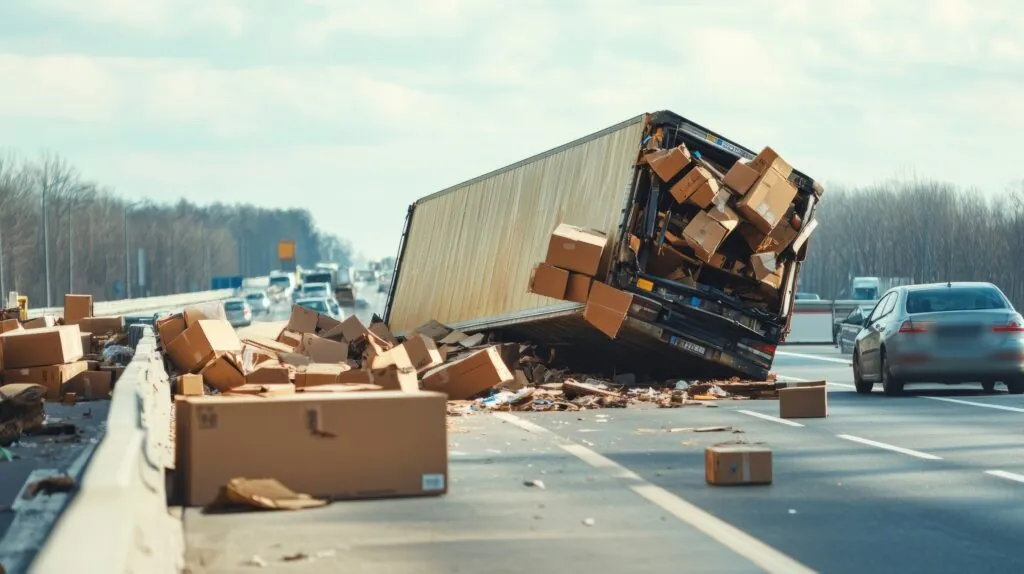
A fully loaded tractor-trailer can legally weigh up to 80,000 pounds under federal guidelines, while certain Michigan designated routes permit specialized multi-axle configurations weighing significantly more. When tens of thousands of pounds of steel coils, lumber, automotive parts, or palletized goods are improperly balanced or poorly tied down, the entire vehicle becomes unstable.
Shifting cargo drastically alters a semi-truck's center of gravity during routine turns, sudden lane changes, or highway braking. This instability triggers violent jackknifes, rollovers, and cargo spills across multi-lane Michigan highways such as I-75, I-94, and US-23.
Federal Cargo Securement Standards Under 49 CFR Part 393
Commercial motor carriers operating in interstate and intrastate commerce must strictly comply with Federal Motor Carrier Safety Administration (FMCSA) regulations regarding cargo securement:
- Working Load Limits: Tie-downs, chains, straps, and ratchets must meet aggregate strength requirements equal to at least half the total weight of the cargo being secured.
- Mandatory Pre-Trip and En-Route Inspections: Truck drivers are legally required under 49 CFR 392.9 to inspect cargo securement devices within the first 50 miles of travel and re-check the load every 150 miles or three hours of driving.
- Specific Loading Directives: Heavy specialized freight such as metal coils, heavy machinery, and concrete pipes requires specific blocking, bracing, and friction mats to prevent front-to-back or lateral movement.
Identifying Liable Parties Beyond the Truck Driver
Unlike standard two-car crashes, commercial trucking litigation involves multiple corporate entities that may share legal responsibility for a cargo-related rollover or spill:
- Third-Party Shippers and Loaders: Warehouse facilities or third-party logistics firms that packed, stacked, or sealed the trailer improperly before handing it over to the driver.
- Motor Carriers and Fleet Owners: Trucking companies that failed to train drivers on securement standards or pressured personnel to skip mandatory load inspections to meet tight delivery windows.
- Equipment Manufacturers: Companies that produced defective tie-down straps, faulty winches, or defective trailer latching mechanisms that snapped under normal operational stress.
Securing Vital Evidence Before It Disappears
Trucking companies and their insurers send rapid-response teams to crash scenes within hours. To protect your claim, our legal team sends formal spoliation letters to preserve electronic logging device (ELD) data, bill of lading documents, weigh station records, and onboard telematics before evidence is deleted or overwritten.
At Shiraz Law Firm, we stand up to large trucking corporations and fight for the full financial compensation injured victims deserve. Reach out to our office today for a free legal consultation.